Rowan Spazzoli

Strategist. Lecturer. Consultant

When will it be enough?

Today I chatted to two uber drivers from Zim about the election. In both discussions, the corruption and looting in Zim came up. And the fact that many politicians (including those in South African and around the world) have amassed ridiculous amounts of money.

But this isn’t limited to politicians. The outgoing CEO of PPC was paid R17 million. The CEO of Checkers got a R100 million bonus last year. And then there’s the likes of Jeff Bezos, who’s $100billion fortune is bigger than the GDP of 80 different countries including Kenya and Sri Lanka.

And this raised the question for me…. When will it be enough?

Do these people really need that much money?

Don’t get me wrong, money is important. But there comes a point where you have a completely unnecessary amount. For me, I need the following:

  • A place to live
  • Access to transport
  • Ability to afford my consumables of choice (food, drinks etc)
  • Some clothes
  • A holiday once a year
  • Enough to support whatever family I might have

And after that… there’s only so much I can buy. I cannot fathom how one would feel it necessary to amass billions of rands in wealth.

The inequality in our world is getting larger. And maybe it’s time that the rich start becoming a little more enlightened.


Image was taken in Capri in 2015. The boat pictured there is in the top 10 most expensive yachts in the world. It’s called the “Rising Sun” and is worth around $200 million

Blog: 270/365
Song of the day: Muse - Follow me

Subscribe to Blog via Email

Enter your email address to subscribe to this blog and receive notifications of new posts by email.

They’ve brought me here

My aunt Jacs left this comment on my last post:

I have learned that all of my experiences and decisions have brought me to this point – I am grateful for all of them . I don’t judge them as good or bad they just are and I am lucky to have had all of them. Wonderful that you are exploring this.

I really enjoy this perspective on past experiences. It changes the basic reflection from “What if?” to “thank goodness that”.

Each step along the path brought you to this moment. And if you are enjoying this moment then you can be grateful for them. And if you aren’t enjoying where you are in this morning, maybe you can try take a few more steps in another direction 🙂


Image was taken on Lions head in 2014

Blog: 269/365
Song of the day: Mr Jones - Counting Crows

Subscribe to Blog via Email

Enter your email address to subscribe to this blog and receive notifications of new posts by email.

Be gentle on your past self

After months of therapy and introspection, I’ve begun to realize how many of my past decisions and actions weren’t a reflection of who I am or what I want from life. I made certain decisions based on family influences, peer pressure or skewed perceptions of the world. And many of my decisions were made out of fear.

Some examples of these include:

  • Studying accounting and finance, despite despising the subjects deeply
  • Continuing on to a post graduate in accounting
  • Not changing to a PPE when I knew I would enjoy it more
  • Being scared to explore and experiment in high school
  • Not trusting my instinct enough in my personal life

There are many more examples of this. Times when my decisions weren’t really mine

But I’ve also been learning how to be gentle with that past version of me. Apart from not being able to change anything now, I also didn’t have access to the same thinking and perspective as I do now.

I’ve also since started to steer myself in a direction that suits me better. I get to take on projects I enjoy and do work that I love.

Regret can be painful. But it’s easier to deal with when you forgive your past self

P.s. was too tired to post this yesterday, so it's a little late :)

Image was taken at blockhouse in February 2011 with Mike and John 🙂

Blog: 268/365
Song of the day: Muse- Something human

Subscribe to Blog via Email

Enter your email address to subscribe to this blog and receive notifications of new posts by email.

Off the tracks

A lot of what I learnt when I was younger about being successful involved following a specific track. Get good marks, progress through the grades, get in to university, get your degree.

Learning this isn’t bad. It gives us a path that allows us to develop without having to make significant life decisions.

I didn’t need to decide whether to progress from junior school to high school. It was the path to be followed.

But after university (and maybe a set of articles/internships), between the ages of 23 and 26 things start feeling a little different. We start losing the tracks underneath us, and they’re replaced with seemingly endless paths.

These involve all sorts of decisions, from friendships to careers, romantic interests to living arrangements.

And those of us who succeeded on the tracks suddenly get very scared.

What is the right option? Which is the correct track to follow? Am 

The answer to these questions is that there is none. We’ve reached the end of the tracks. We are no longer in the same train as everyone else. As much as you might try to find a path, your efforts will be futile.

You’re off the tracks now. It’s time to take charge, explore and decide.


Image was taken at a tube station in London in 2015 🙂

Blog: 267/365
Song of the day: Gryffin & Illenium - Feel Good ft Daya

Subscribe to Blog via Email

Enter your email address to subscribe to this blog and receive notifications of new posts by email.


Trust the team

I have a habit of wanting to take on us much as possible when working in a group setting. This ranges from work projects to planning holidays with friends to the teaching team at UCT.

It’s often intended as a noble and/or kind thing, as i want to help my team as much as possible. And it might be helpful. But taking on too much can have some negative implications, such as:

  • Not giving people in the team the opportunity to learn
  • Over promising and under delivering
  • Stifling conversation between team members
  • Leaving other team members with nothing to do
  • Getting burn out from the additional stress/work

One of the best remedies for this is to trust your team. Especially if you have reason to believe they’ll do a good job. Let them take on what they’re able to handle, and be there should they need help.

Taking on all the work might feel safer, but trusting the team is ultimately more productive.


Image was taking while waiting for my Uber from town to home 🙂

Blog: 266/365

Song of the day: Just for a moment – Gryffin

No F**ks Given

Today I was fortunate to witness the finest display of “no fucks given” that I have ever seen.

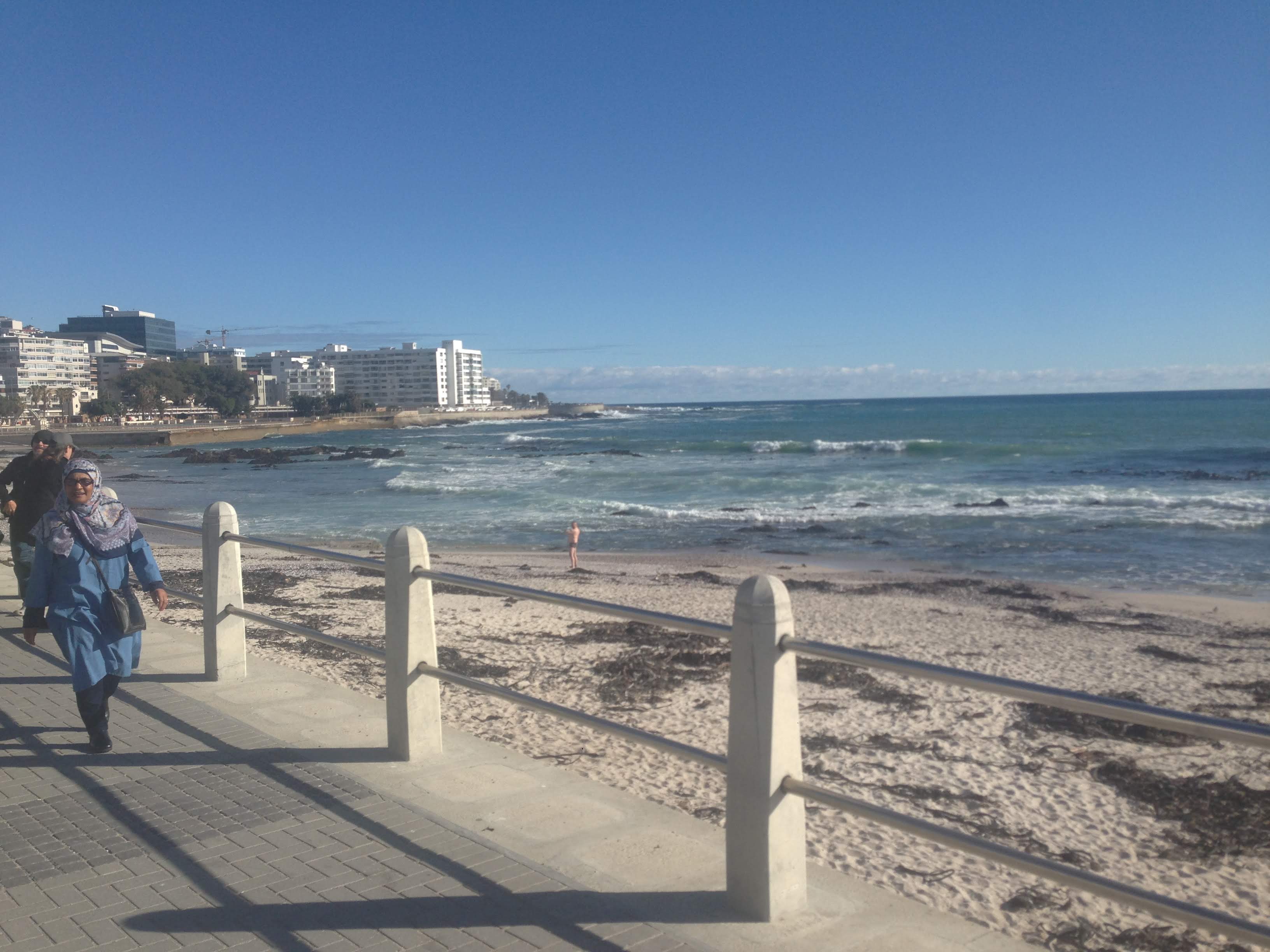
A man had been walking on the promenade and enjoying the day. He then decided that he wanted to soak up more of the sun, so he walked to the waters edge and took off his shirt. Then his shoes. Then his pants.

And then he just stood there. Enjoying the sand and sun and ocean.

And he gave zero fucks.

Look at him:

IMG_9872

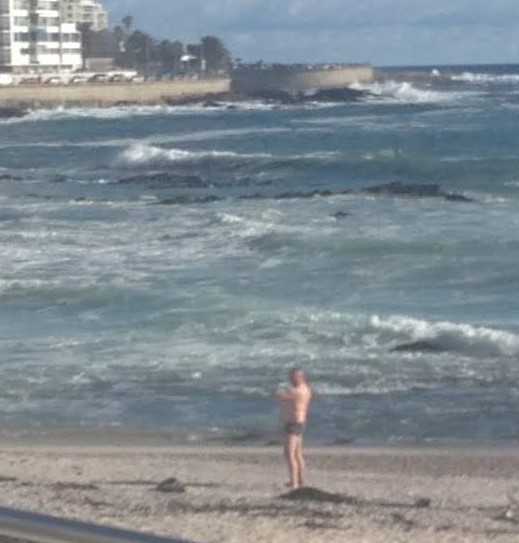
Now, a little closer:

IMG_9872zoom

See? No fucks were given.

My friend and I then went to the food market. We were there for easily an hour. looking at the stores and eating burritos. And when we returned, guess what?

The man was still there. And he had still not given a single fuck

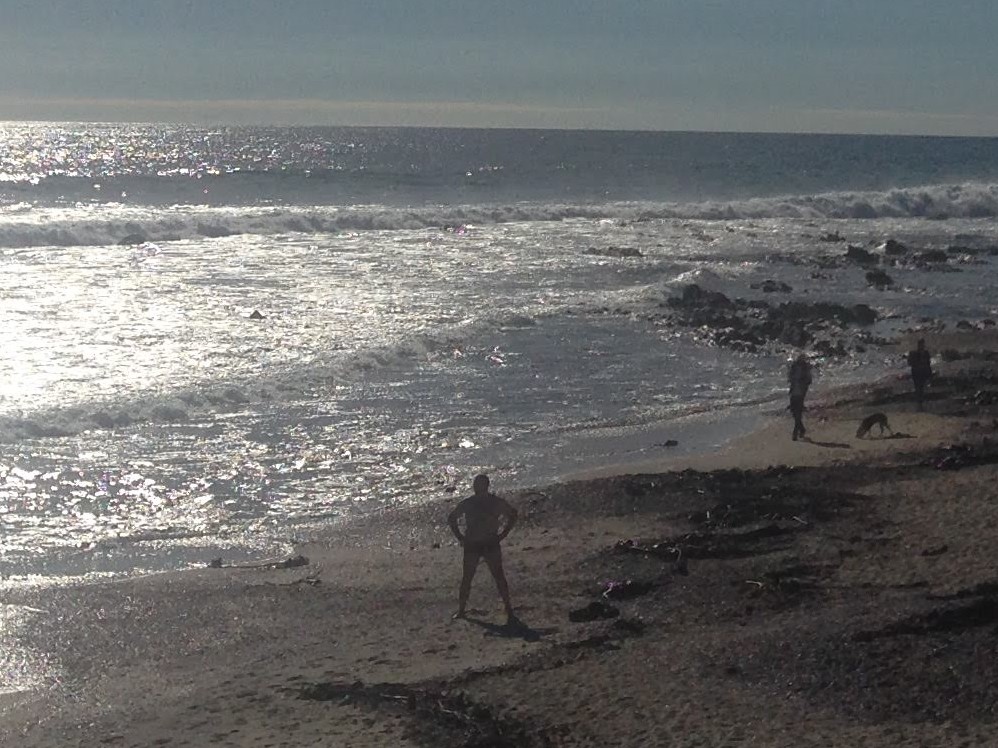
See the cover photo of this blog post? If we zoom in a little you can see his magical silhouette. In a superman pose. Not giving a fuck

IMG_9874zoom

That. That right there is inspirational.

Learning to give less fucks

There’s a popular book called “The Subtle Art of Not Giving a F*ck” which is an extended version of this blog post by the same name. I’ve read the blog and some parts of the book. And I aspire to learn how to give less fucks.

In reality I find this really difficult. Even when it’s downtime, be it the weekend or when I have little work to do. My stress is at a constantly high level. And there is always an undercurrent of anxiety, be it social or work related, that I carry with me.

But I’m learning to work through it and have proper down time. Yesterday I was able to sleep and relax the whole day without feeling guilty.

And one day, I aspire to give as few fucks as my hero on the promenade.

P.s. 100 days to go of the #365of25 journey!

Image is of the fine specimen of a human, taken from the prom, when we were on our way back.

Blog: 265/365

Song of the day: Honoraries – Get there someday

The (perceived) value of rarity

Last night I, and millions of people around the world, looked up at the night sky to see the lunar eclipse. It was a spectacle and an absolute joy to watch.

It was the longest lunar eclipse that we’ll see for the next 100 or so years. And most of us will be dead by then.

But this got me thinking. What degree was looking up at the moon specifically because it was a rare and what degree was because of how beautiful it was?

There are all sorts of interesting sky events that happen regularly. A full moon happens almost every month. The international space station comes past almost daily. And there are many beautiful moonrises and sunsets that happen frequently.

Don’t get me wrong, there is nothing wrong with appreciating something that’s rare. Scarcity itself is a form of value.

The problem is when the only reason something is valuable is because it’s rare and not because it is has inherent value.

Diamonds are a shareholders best friend

Take, for example, diamonds. The average consumer sees diamonds as being phenomenally valuable and highly coveted. A friend of mine got an engagement ring that cost R300 000! (this still makes me feel ill to be honest)

We value diamonds because they’re “rare”. And if anyone says differently I have a couple of points:

  • There are much prettier minerals and gems in the world that cost less
  • Artificial diamonds have exactly the same chemical structure and sell for less
  • Diamonds look like little glass balls
  • There is no intrinsic value in a diamond. You cannot eat it or use it to produce goods.

And most importantly, they’re not actually that rare. During the diamond rush in South Africa, a chap (that you might have heard of) called Cecil John Rhodes was able to gain control of most of the supply of diamonds through his company, De Beers.

The company then restricted the supply of diamonds and coupled this with an extensive advertising campaign. This increased the perception of rarity of diamonds which drastically increased prices (and profits). (See more in this great college humour video)

Rare doesn’t mean valuable

There are a number of other brands and companies that do this too. Some famous fashion companies are known to limit supply or destroy unused stock to make sure that the market has less than it requires.

As consumers, and as people, we must make sure that we understand what drives the value of something. It’s alright to appreciate something that is rare. Just know that rare doesn’t necessarily mean valuable.


Images of the moon taken by my mother (and shamelessly stolen off her facebook feed)

Blog: 264/365

Song of the day: Creedance Clearwater Revival – Bad Moon Rising

Pineapple is live!

The revolutionary insurance app, Pineapple, is now live! You might remember this post from a few months ago when they sorted out an insurance claim for me on the same day.  I was also their first ever insurance claim #firstclaimantswag

They’re changing the insurance industry.

And now you can be a part of it.

Today Pineapple launched across South Africa with an activation that saw 30 000 Pineapples given away. As a bonus, one of these Pineapples had a golden ticket for a trip to Brazil (where Pineapples come from).

If you’re tired of regular insurance and are ready for transparent, simple and fair insurance, download the app and sign up today!

P.s. here are links to the website, Facebook and Instagram pages

Image was shamelessly stolen off their instagram page and features the three main programmers, including my brother and friend Sizwe

Blog: 263/365

Song of the day: Pina Colada Song – Rupert Holmes