Rowan Spazzoli

Strategist. Lecturer. Consultant

The Friday Shoutout: The Bulungula Incubator

In February I attended the first Bertha Centre collective at the UCT GSB. The guest speaker was Réjane Woodroffe, the founder of the Bulungula incubator. She spoke about her personal journey and how she went on to found the incubator (you can listen to the audio from the session here)

Réjane’s story is really interesting. She grew up in the cape flats and studied a Business Science degree at UCT. After this she spent a few years in investment banking before founding the incubator.

On the website the incubator is described as follows:

WE ARE a non-profit organisation established in 2007 although our work in the area began in 2004 with the establishment of the eco-sustainable and award winning community owned, Bulungula Lodge (www.bulungula.com).  We are located in a remote rural area known as the Xhora Mouth Administrative Area which is based in the Mbhashe municipality on the Wild Coast of the Eastern Cape. The Mbhashe municipality is one of the poorest in the country.

And their mission is as follows:

OUR MISSION is to be a catalyst in the creation of vibrant and sustainable rural communities. We work with our community members from CONCEPTION to CAREER with an integrated development strategy in education, health and nutrition and sustainable livelihoods.  All projects are designed, prioritised, implemented and managed in partnership with our community and through traditional and elected leadership structures.

What makes Bulungula different 

Apart from being an incredible, award winning social enterprise, there are a few things that really stand out for me that make this organisation different:

  1. The founders live in the area with the community.
  2. Every 5 years, the founders leave the project entirely on its own to function for a few months. The reason for this is that they want it to be as sustainable as possible and not depend on them.
  3. The community is involved in the decision making and running of the project
  4. The organisation is owned by the community through a trust. All the profits are fed back in to the community directly
  5. The incubator focuses on all aspects of development. They look at everything from education to employment and health.

If you’d like to find out more about this organisation, check out this video (it’s only 4min and really amazing) or visit their website.

I’m really inspired by the work done at the Bulungula Incubator and can’t wait to see it continue to grow 🙂


Image is of the Storms River canyon in the Eastern Cape, taken when I visited the area in 2016 🙂

Song of the day: Roses - Chainsmokers
Blog 152/365. Read more about my #365of25 journey here
Friday Shoutout: The Department of Coffee

Every year the Strategic Thinking students get given a project where they have to develop a strategy for an existing business. This year we decided that they should do the project on the Department of Coffee, one of the most epic businesses in Cape Town. We brought Wonga, one of the founders, to speak to the class last week Friday.

Department of Coffee started around 5 years ago when a three friends decided they wanted to bring “coffee culture” to Khayelitsha. At the time the only coffee available in the township was the instant kind, and they wanted to change that.

Since then they have opened a number of stores around the city. And they’ve been featured in national and international news (including CNN, KFM, SABC and more).

They have had some ups and downs though. Last year their main shop was broken into and all their equipment was stolen. But through a crowd fund and a generous individual donation, they were able to get things going again.

These three have done wonders in bringing coffee culture to the township. I can’t wait to see what our students produce for them. And I can’t wait to see them grow in the future!

If you want to see more, a former UCT student put together this video on the Department of coffee


(Quick shoutout to Kayleen... Happy twennyNOYN!

Image is from Travelground and can be accessed here. I sadly forgot to take a picture during the lecture

Song of the day: Love is only a feeling - The Darkness 
Blog 139/365. Read more about my #365of25 journey here
 

Subscribe to Blog via Email

Enter your email address to subscribe to this blog and receive notifications of new posts by email.

The Friday Shoutout: Silulo

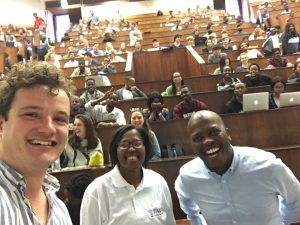
Today Luvuyo Rani gave a guest lecture to my Strategic Thinking class. Luvuyo is one of the founders of Silulo, an internet cafe, computer training centre and technology company based in the townships. It started 14 years ago out the boot of a car and has now trained 33 000 students, employs 200 people and has more than 40 branches. Luvuyo was recently awarded social entrepreneur of the year at the World Economic Forum.

I’ve had the pleasure of seeing Luvuyo speak in the class 5 times. He has also assisted with some of my entrepreneurial work and advised me on university projects. Every time I see him I learn something new.

Business in the township for the township

One point that Luvuyo emphasized today is that of building businesses in the township. And, importantly, building these to fill the needs of the township. The dominant narrative around townships is that they are places devoid of true entrepreneurship. Luvuyo proves otherwise.

And he’s putting his money where is mouth is. This month he’s launching a business incubator in Mitchells Plain. The objective of the incubator is to help scale township businesses and help them serve the areas where they come from.

I cannot wait to see the incubator come to life. I’m in constant awe of what Luvuyo and Silulo have achieved!

Thanks again for coming to talk to our students!


Main image was taken during Luvuyo’s talk. Image at the end of the post is a selfie with Luvuyo and his new General Manager, Bongiwe. This lecture theatre is where I teach every week. It’s pretty intimidating but I’ve gotten used to it 🙂

Song of the day: Rudimental - These Days
Blog 125/365. Read more about my #365of25 journey here


Subscribe to Blog via Email

Enter your email address to subscribe to this blog and receive notifications of new posts by email.

The Friday Shoutout: Jonga

Today’s shoutout goes to one of the most exciting social enterprises in South Africa: Jonga. The CEO and co-founder, Ntsako, came and gave a talk to the students in the Strategic Thinking course.

Jonga describe themselves on their website as follows:

“Jonga is a tech start up and social enterprise that provides simple, low cost and most importantly community based alert systems for lower to middle income households. It consists of an alarm and app combo that notify you and allow you to panic when being burgled or just allows you to panic when experiencing or witnessing crime whilst in the streets. It then sends a panic notification along with your location to all the Jonga app users within the area. Its purpose is to allow for real crime reporting, making people aware about potential threats in the vicinity and lastly prompting community watch responses.”

Launch

The team launched their device last week, after an extensive period of development. They’ve made some great partnerships over that time, including media houses, angel investors and startup competitions. And they’ll be rolling out their devices in association with Santam, one of South Africa’s biggest insurers.

Did I mention that all they are did all of this during their undergraduate degrees?

I am in awe of the work done by this team, and cannot wait to see what the future holds for them!


Image was from today’s guest lecture about Jonga delivered by Ntsako.

Song of the day: Major Happy - Fred V and Grafix
Blog 118/365. Read more about my #365of25 journey here


Subscribe to Blog via Email

Enter your email address to subscribe to this blog and receive notifications of new posts by email.


The Friday Shoutout: Phaphama SEDI

In 2013 I joined an organisation that fundamentally changed my life. It was called Siyaya, and it aimed to help entrepreneurs from developing areas in Cape Town by partnering them with students from the university. I worked as a consultant that year and in 2014 was the vice president of the organisation. We then formed a new organisation as an NGO, so that fund raising would be easier. And the new organisation was called Phaphama

Phaphama is in it’s fourth year of operation now. They have trained many entrepreneurs and are expanding to new areas around Cape Town. Some info about them is as follows:

Phaphama Small Enterprise Development Initiative (S.E.D.I) in a Non-Profit Organisation that was established in 2014 by a group of students from the University of Cape Town (UCT), who are committed to promoting leadership, entrepreneurship and small enterprise development in communities in and around Cape Town. Phaphama runs a business development consulting programme in Khayelitsha. The programme runs over 7 months and consists of a series of business management skill sessions and business data collection and analysis. At present eighteen Khayelitsha-based businesses are selected annually to be a part of the project. The programme caters for a diverse array of meaningful local business ventures including, for example, Dlangakana Construction, Soulpix Photography and Lusanda Nail Salon to name a few.

Applications

Applications for Phaphama SEDI are open and close on Monday 26 February. If you join the organisation you’ll be involved in assisting entrepreneurs from Khayelitsha and Philipi with their strategies and business development. It is a fantastic opportunity to experience business in real life, use your position of privilege as UCT students to assist with economic development and to share and grow your networks. There may also be opportunities from non-UCT individuals to get involved

To apply send a cover letter and CV to hmpjul002@myuct.ac.za by 26 February 2018. Contact me if you need more details

Funding

If you want to support Phaphama in other ways, you can do so by helping with funding. This goes towards providing transport for the consultants, organising sessions and other general operations. I’d encourage anyone who can donate to do so at this link.

If you’d like to contribute funding to them directly, please send me an email and let me know (rspazzoli@gmail.com)

Connect

I’ll be joining the Board of Directors of Phaphama this year as a non-executive director. If you want to get in touch, even if it’s just to come and see what they’re up to or link them up to someone, let me know.

Wishing the committee, the consultants and the entrepreneurs all the best for 2018!


Image was taken in 2014 with Siyaya, which became Phaphama/ The entrepreneurs are pictured with certificates for completing the program.

Song of the day: Born Ready (ft Hope Murphy)[Halogen Radio Edit] - Disco Fries
Blog 104/365. Read more about my #365of25 journey here


Subscribe to Blog via Email

Enter your email address to subscribe to this blog and receive notifications of new posts by email.

The Friday Shoutout: The Solution Space

Today’s Friday shoutout goes to the MTN Solution Space at the UCT Graduate School of Business. Over the past few weeks I’ve been writing my thesis here. It’s a really great environment, and plays host to a bunch of academics, startups and professionals. They also host some really great events, such as info sessions on Impact Investing or Social Impact Bonds. As per the website:

“The Solution Space is our distinct approach and model. We create a third space between academia and industry where business can escape the pressures of today to advance new ideas through piloting cutting-edge concepts with Africa’s brightest and most creative minds, and universities can shape research and learning opportunities that are connected to relevant and real world challenges.”

There is a second solution space out in Philippi Village, which aims to connect the business school to parts of the informal and township business scene. Once I’ve finished my thesis work I’m planning on heading out there and exploring it 🙂

So thanks to the people at the Solution Space for providing such a great place to work and learn. It’s become one of my favourite places in the city 🙂


Image was taken today at the Solution Space 🙂

Song of the day: Armin van Buuren & Vini Vici feat. Hilight Tribe – Great Spirit
Thesis update: Tough day. Got a small amount of work done and arranged meeting with supervisor
Blog 93/365. Read more about my #365of25 journey here


Subscribe to Blog via Email

Enter your email address to subscribe to this blog and receive notifications of new posts by email.

The Friday Shoutout: Uthini

Today I’m starting a new instalment on my blog titled “The Friday Shoutout.” Each week I’ll be highlighting an interesting/awesome person, business or project that I’ve come across. The idea is to spread the word about the exciting things going on the fields of development, entrepreneurship, education, economics, strategy and beyond. If one of the Friday shoutouts catches your attention, send me an email and I’ll connect you with them 🙂

My first Friday Shoutout goes to Uthini, an edutech startup based in Cape Town

Uthini

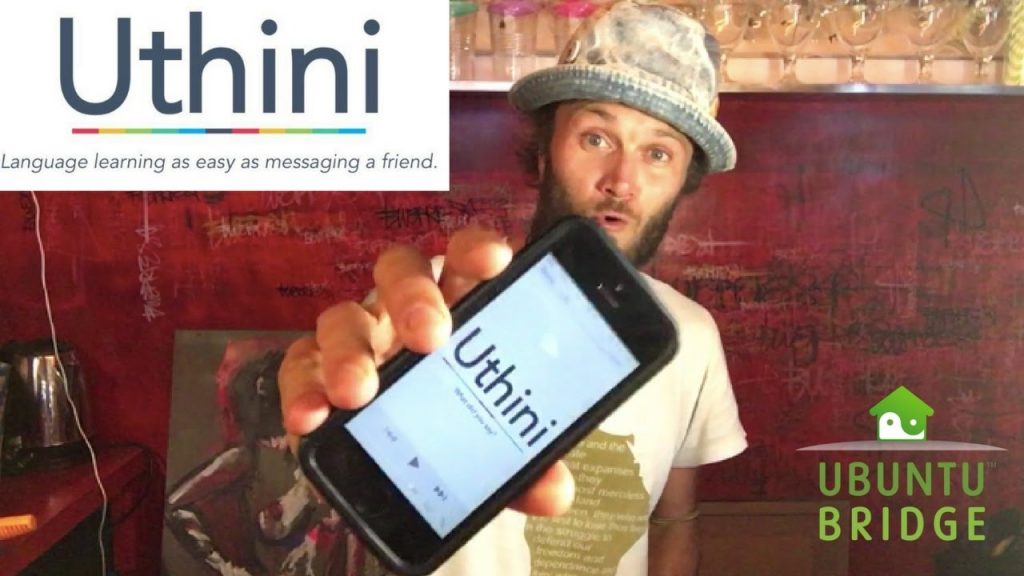
Uthini is an exciting new startup that is making it easier to learn South African languages. Their teaching is done through the Telegram messaging platform (similar to Whatsapp), where a bot and live tutor guide you through the content. Lessons are 15min long and scheduled daily at a time that suit you. They use a combination of videos, text, gifs and voice notes to deliver the content and the tutor gives you feedback in real time.

Uthini have partnered with Ubuntu Bridge to deliver content. This ad is from their 2017 pilot

What makes this unique is that the bitesized lessons can easily fit them into you day. The use of a mobile chat platform is intuitive and simple, and means you just need a phone to access it. And the daily exposure helps solidify the learning. The resources are also always available, so you can practice when you have time. And at present they have lessons available in both Xhosa and Zulu. (Bonus: you can access the lessons from wherever you are in the world!)

I took part in their pilot program that launched in January last year. And over that time I got into a great routine and was able to learn some basic Xhosa. I really enjoyed it, and once I’ve handed in my thesis I’m going to sign up for more.

The power of language

Even though Uthini is just over a year old they’ve already made massive strides and have achieved so much. They’re currently part of the Injini Edutech incubator where they have received significant support in the form of funding, mentorship and workspace.

Apart from the innovation in delivery and approach, what really excites me about Uthini is how easy and accessible they’re making it to learn South African languages. There are many people who have begun to recognise how important it is to learn these (especially white South Africans). And the combination of the novel delivery, easy time management and affordability mean that they’re able to really drive learning.

So a massive Friday Shoutout to the team from Uthini, keep up the great work!

(P.S. If you’ve been wanting to learn Xhosa or Zulu but have been making excuses, now is your time to act! Seriously. Go sign up. Here’s the link again in case you’re feeling too lazy to scroll up. Now go! 🙂


Image was taken from a Lions-head hike early this morning. One of the founders of Uthini, Miguel, was part of the hiking group 🙂


Thesis update: focused on my consulting project today
Blog 75/365. Read more about my #365of25 journey here


Subscribe to Blog via Email

Enter your email address to subscribe to this blog and receive notifications of new posts by email.

A new world of personal hyper specialisation

Classic economic theory includes the concept of specialisation and returns to scale. If you’re producing one “widget”, it might cost R100. But if you’re producing a thousand widgets, each one would cost R20.

This has been massively beneficial to consumers. A normal day for me doesn’t consist of gathering food, weaving cloth and hunting animals. As such, almost all the products I consume are produced by specialised companies.

Now though, the internet has taken this one step further. Not only are goods becoming hyper specialised but services are too.

For example, today I didn’t have the time to cook. So I opened an app, ordered food and 15min later it arrived. It only cost R10 to deliver it (plus tip), which is almost less than the petrol it would’ve cost me to pick it up. Also, considering the opportunity cost of me going out and getting food, it is definitely a saving.

This specialisation of service is extensive, and examples include:

  • Buying shopping online and having it delivered
  • Taking an Uber instead of driving (the service isn’t new, but it is much cheaper and more widerly used now due to the technology
  • Using a banking app instead of going and standing in line at a bank
  • Sending people gifts without having to leave the house
  • Doing taxes through an app like TaxTim

No more chores

Soon, AI will be able even further expand the services that are available to us, and be able to do them better than we can. Examples of these might be personal AI assistants, autonomous vehicles and delivery drones that will take care of all your most basic chores.

Ultimately, the scale, complexity and size of these systems will mean that they will do your day to day tasks faster and cheaper than you can.

Which means you don’t have to spend time doing things you’re bad at, like cooking, and can either focus more energy into professional work.

Or maybe even have a little more time for sleep


Image is of a present that was delivered to me for my birtday

Also… I have to be up in 3 hours for a flight. Yay